
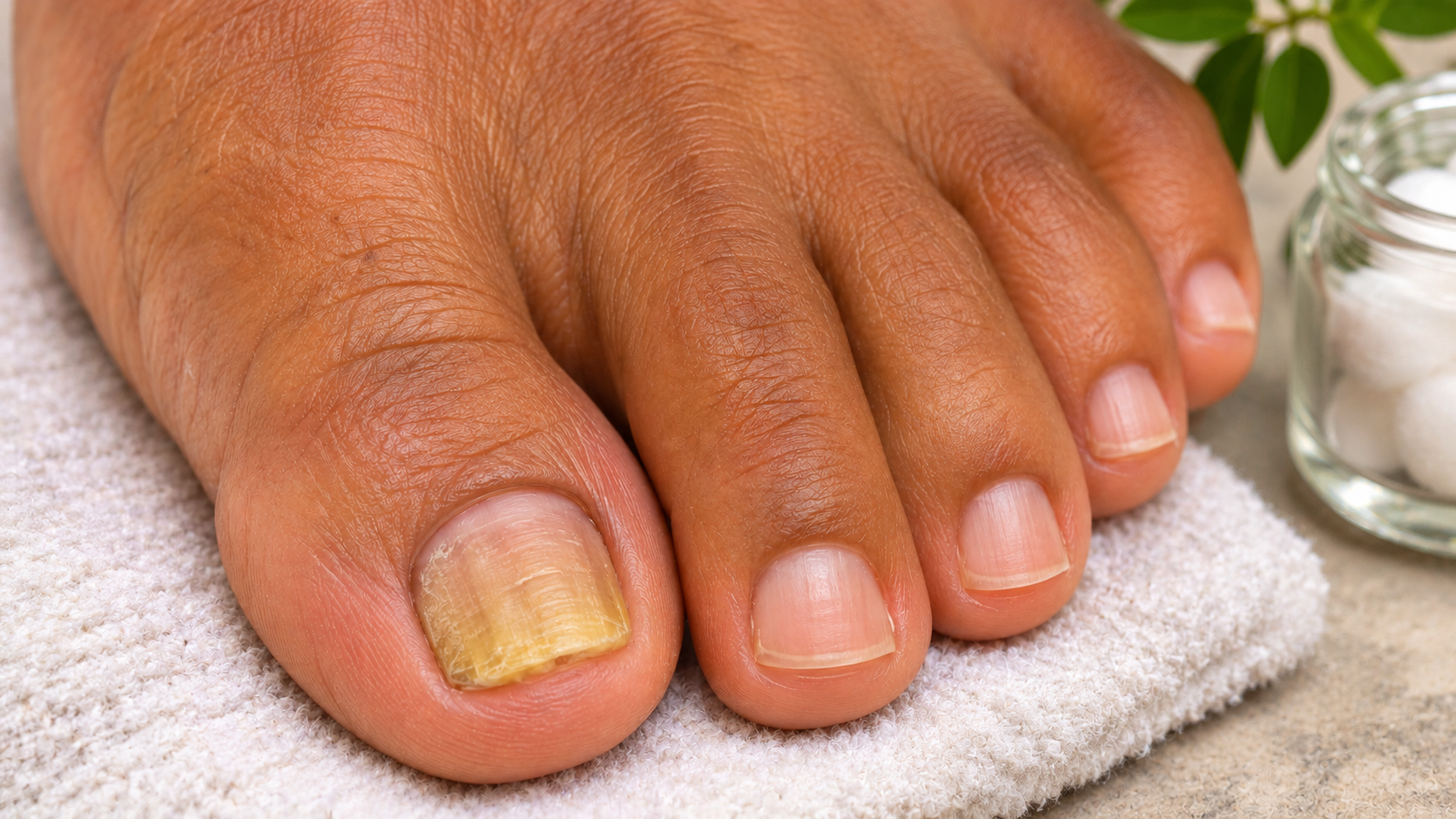
Why Is My Toenail Turning Yellow? Common Causes and Treatment
Have you noticed that one of your toenails is turning yellow? Maybe the discoloration appeared gradually, or you’ve noticed that your toenail is becoming thicker, brittle, or more difficult to trim.
Yellow toenails are a common concern and can develop for several reasons. While a fungal toenail infection is one possible cause, discoloration can also result from nail polish, repeated pressure from shoes, injuries, or certain medical conditions.
Understanding why your toenail is turning yellow can help you determine whether the change is temporary or something that should be evaluated by a podiatrist.
What Causes Yellow Toenails?
Healthy toenails are generally translucent, allowing the pinkish color of the nail bed to show through. Changes in nail color can occur when the nail itself or the tissue beneath it is affected.
Some common causes of yellow toenails include:
- Fungal toenail infections
- Repeated pressure or trauma
- Nail polish staining
- Aging-related nail changes
- Psoriasis and other skin conditions
- Less common medical conditions
The appearance of the nail, whether one or several toenails are affected, and the presence of thickening or crumbling can provide clues about the underlying cause.
Fungal Toenail Infections
One of the most common causes of yellow toenails is a fungal infection known as onychomycosis.
Fungal organisms can enter the nail through small openings or damaged areas, causing changes in the nail’s appearance and texture.
Common symptoms include:
- Yellow, white, or brown discoloration
- Thickening of the toenail
- Brittle or crumbly nail edges
- Changes in nail shape
- Debris accumulating beneath the nail
- Separation of the nail from the nail bed
Fungal infections may begin in one toenail and gradually affect others.
Although fungal toenail infections are not always painful, advanced cases can make nails uncomfortable, particularly when wearing shoes.
Can Toenail Fungus Go Away on Its Own?
Fungal toenail infections generally do not resolve without treatment.
Because the fungus can persist within the nail, treatment may be needed to eliminate the infection and allow healthier nail growth.
Even after successful treatment, it can take many months for a toenail to grow out and regain a more normal appearance.
A podiatrist can evaluate the nail and determine whether a fungal infection is present.
Can Tight Shoes Cause Yellow Toenails?
Yes. Shoes that repeatedly press against the toenails can contribute to discoloration and changes in nail appearance.
This is particularly common among people who wear narrow shoes or participate in activities involving repeated pressure against the front of their footwear.
Over time, repeated trauma can damage the nail and cause:
- Yellow or brown discoloration
- Nail thickening
- Changes in nail shape
- Separation from the nail bed
- Tenderness around the affected toe
Toenail trauma can sometimes resemble a fungal infection.
If your toenail became discolored after an injury or after wearing tight shoes, a podiatrist can help determine whether the change is related to trauma or another condition.
Can Nail Polish Turn Toenails Yellow?
Yes. Certain nail polishes, particularly darker or heavily pigmented colors, can leave temporary stains on the nail plate.
This may become more noticeable when polish is worn continuously or applied without a protective base coat.
Nail polish staining typically causes discoloration without significant nail thickening, crumbling, or other structural changes.
However, a yellow toenail should not automatically be attributed to nail polish, especially if the nail is becoming thicker or changing shape.
If discoloration persists as the nail grows out, an underlying nail condition may be responsible.
Do Toenails Turn Yellow With Age?
Toenails can change in appearance as people get older.
Nail growth often slows with age, and toenails may become thicker, more brittle, or slightly discolored.
However, noticeable yellowing should not automatically be considered a normal part of aging.
Fungal infections, repeated footwear pressure, and other conditions can become more common with age and may contribute to nail changes.
If your toenails are becoming increasingly yellow, thick, or difficult to trim, a podiatrist can help identify the cause.
Can Psoriasis Cause Yellow Toenails?
Psoriasis is an inflammatory condition that can affect the skin and nails.
When psoriasis involves the toenails, it may cause discoloration and changes in nail texture.
Symptoms can include:
- Yellowish or brownish discoloration
- Small pits in the nail surface
- Thickening of the nail
- Separation from the nail bed
- Crumbling or irregular nail growth
Nail psoriasis can sometimes resemble a fungal infection, and both conditions can occur together.
Proper diagnosis is important because treatment for psoriasis differs from treatment for toenail fungus.
What If Only One Toenail Is Yellow?
When only one toenail becomes yellow, the cause may be localized to that nail.
Possible explanations include:
- A fungal infection affecting one nail
- Previous trauma or injury
- Repeated pressure from footwear
- Nail polish staining
- Changes in nail growth
However, the number of affected nails does not reliably identify the cause.
A fungal infection can begin in a single toenail, while repeated trauma may also affect multiple nails.
If one toenail continues changing in color, thickness, or shape, professional evaluation may be helpful.
Why Is My Toenail Yellow and Thick?
A toenail that is both yellow and thick may be affected by a fungal infection, repeated trauma, psoriasis, or another nail disorder.
Thickened toenails can become difficult to trim and may cause discomfort when shoes press against them.
In some cases, debris builds up beneath the nail, making it appear raised or irregular.
Because several conditions can cause similar symptoms, a podiatrist may recommend testing a nail sample before beginning antifungal treatment.
How Are Yellow Toenails Treated?
Treatment depends on the underlying cause.
Antifungal Medications
If a fungal infection is confirmed, treatment may involve topical or oral antifungal medications.
Topical treatments are applied directly to the affected nail, while oral medications work throughout the body.
The most appropriate option depends on factors such as the severity of the infection, the number of affected nails, medical history, and potential medication interactions.
Professional Nail Care
A podiatrist may carefully reduce the thickness of an affected nail to improve comfort and make trimming easier.
This process, called debridement, may also be used alongside other treatments.
Footwear Modifications
If repeated pressure is contributing to nail changes, wearing properly fitted shoes with adequate toe room may help prevent additional irritation.
Treating Underlying Conditions
When discoloration is related to psoriasis, trauma, or another medical condition, treatment focuses on addressing that cause.
Not every yellow toenail requires antifungal medication.
Can You Prevent Yellow Toenails?
Although not every cause of toenail discoloration can be prevented, certain habits may help maintain healthier nails.
Consider these foot care practices:
- Keep your feet clean and dry.
- Change socks regularly, especially after sweating.
- Wear shoes that provide adequate room for your toes.
- Avoid sharing nail clippers or other nail care tools.
- Wear protective footwear in public locker rooms and communal showers.
- Trim toenails straight across without cutting them excessively short.
- Address athlete’s foot promptly to reduce the risk of fungal spread to the nails.
If you regularly wear nail polish, periodically checking the appearance of your natural nails may help you notice changes.
When Should You See a Podiatrist for Yellow Toenails?
Consider scheduling an evaluation if:
- Your toenail continues becoming more yellow or discolored.
- The nail is thick, brittle, or crumbling.
- You notice separation between the nail and nail bed.
- Several toenails are changing in appearance.
- The nail becomes painful or difficult to trim.
- Over-the-counter treatments have not improved the condition.
- You are unsure whether the discoloration is caused by fungus.
People with diabetes, poor circulation, or reduced sensation in their feet should seek professional guidance when nail changes develop.
Seek prompt medical attention if you notice significant redness, warmth, swelling, drainage, or rapidly worsening pain around the nail.
A new dark streak or unusual pigmentation that does not grow out with the nail should also be evaluated rather than assumed to be a fungal infection.
Get Help for Yellow Toenails
Yellow toenails can develop for several reasons, and identifying the cause is important for choosing the right treatment.
Whether the discoloration is related to a fungal infection, repeated trauma, or another nail condition, a podiatrist can examine your toenails and recommend appropriate care.
If you’ve noticed persistent yellowing, thickening, or changes in your toenails, contact Dr. Semma at Canton Foot & Ankle Specialists to schedule an evaluation.
Professional assessment can help determine what’s causing the changes and identify treatment options to improve nail health and comfort.
Medical Disclaimer: The information provided in this article is for general educational purposes and is not a substitute for professional medical advice, diagnosis, or treatment. If you are experiencing foot or ankle symptoms, contact Dr. Semma at Canton Foot & Ankle Specialists to schedule an evaluation. If you believe you are experiencing a medical emergency, seek immediate medical care.