
What Causes a Drifting Toe?
A toe that slowly begins drifting out of position may not seem like a major concern at first, but over time it can become painful, make wearing shoes difficult, and lead to permanent deformity. Whether your toe is leaning toward a neighboring toe, crossing over another toe, or lifting off the ground, it’s often a sign of an underlying foot problem that should be evaluated.
Early diagnosis and treatment can often prevent the condition from worsening.
What Is a Drifting Toe?
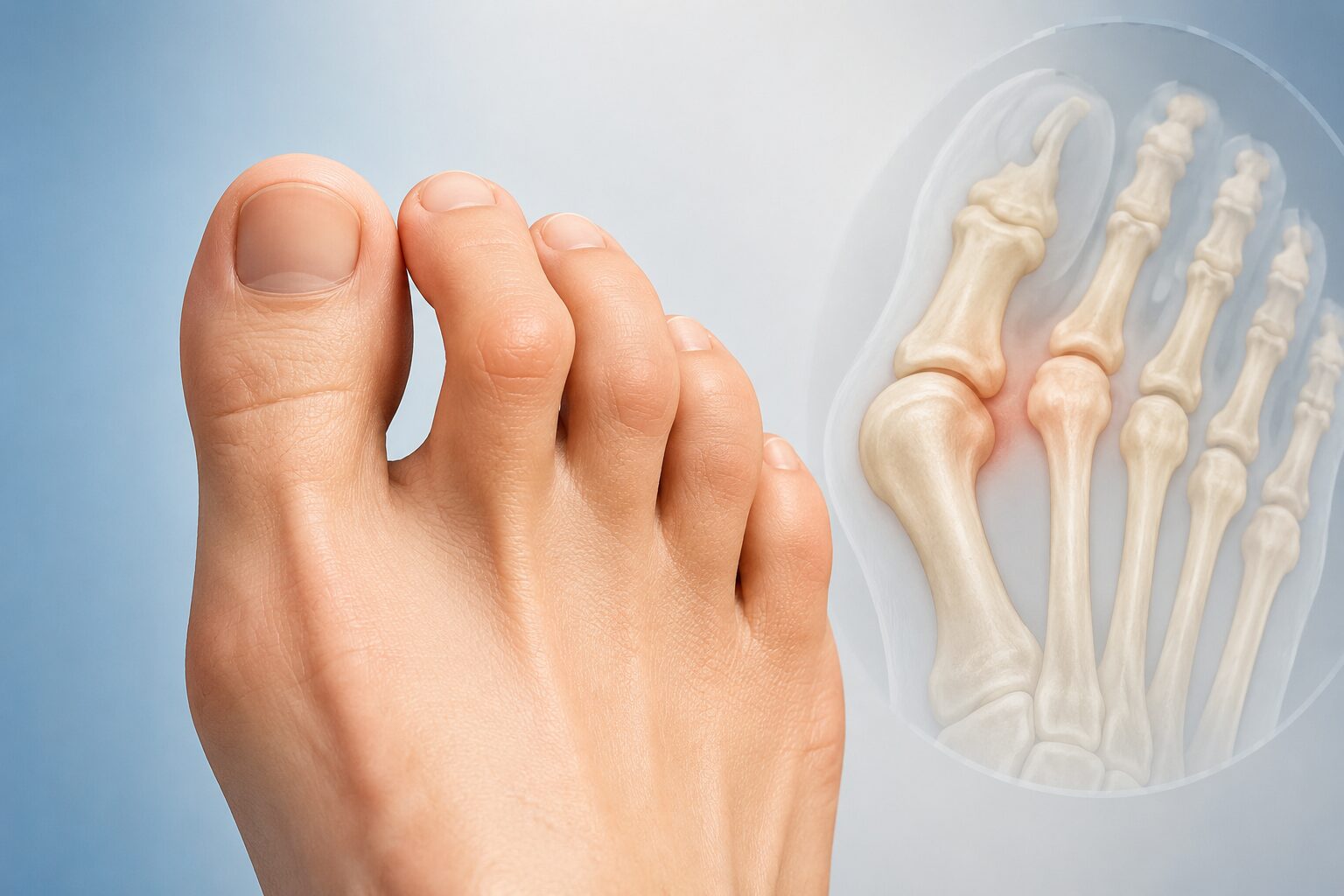
A drifting toe occurs when one of the toes gradually moves away from its normal alignment. The second toe is most commonly affected, but any toe can shift over time.
The movement is usually caused by weakening of the ligaments, tendons, or joints that normally keep the toe stable. As these supporting structures become damaged, the toe can slowly change position.
Common Symptoms
A drifting toe may cause:
- A toe that gradually leans toward another toe
- Pain at the base of the affected toe
- Swelling around the joint
- Difficulty wearing shoes comfortably
- Corns or calluses from rubbing
- A feeling that the toe is unstable
- Pain when walking or standing
Some patients notice the deformity before they experience significant pain.
Common Causes of a Drifting Toe
Several conditions can cause a toe to drift over time.
Plantar Plate Injury
One of the most common causes is a tear or stretching of the plantar plate, a strong ligament beneath the toe joint. When this structure weakens, the second toe often begins drifting upward or toward the third toe.
Hammertoe
As hammertoes progress, muscle and tendon imbalance can gradually pull the toe out of alignment, making the deformity more noticeable.
Bunions
A bunion can push the big toe toward the second toe, forcing the second toe to shift out of position as well.
Arthritis
Arthritis can damage the joints in the foot, causing instability and gradual toe deformity.
Injury
A previous sprain, fracture, or trauma to the toe may weaken the supporting ligaments, allowing the toe to drift over time.
Improper Foot Mechanics
Flat feet, high arches, or abnormal walking patterns can place excessive stress on the toe joints, increasing the risk of deformity.
Who Is at Risk?
You may be more likely to develop a drifting toe if you:
- Are over age 50
- Have bunions or hammertoes
- Wear narrow or high-heeled shoes regularly
- Participate in high-impact activities
- Have rheumatoid arthritis
- Have a family history of foot deformities
How Is a Drifting Toe Diagnosed?
A podiatrist will examine your foot to determine which structures are causing the toe to move. X-rays may be recommended to evaluate joint alignment, arthritis, or bone deformities.
Early diagnosis is important because flexible deformities are often easier to treat than rigid ones.
Treatment Options
Treatment depends on the underlying cause and how advanced the deformity has become.
Conservative treatment may include:
- Supportive footwear with a wider toe box
- Custom orthotics
- Padding or splints
- Toe taping
- Anti-inflammatory medications
- Activity modification
If the toe has become severely unstable or painful, surgery may be recommended to repair damaged ligaments, correct deformities, or realign the toe.
When Should You See a Podiatrist?
Schedule an evaluation if you notice:
- A toe that continues to shift position
- Pain at the base of the toe
- Difficulty fitting into shoes
- Swelling that does not improve
- A toe beginning to cross over another toe
Prompt treatment may help prevent permanent deformity and reduce the need for surgery.
Find Relief at Canton Foot & Ankle Specialists
If you’ve noticed a toe drifting out of alignment, don’t wait until it becomes more painful. The team at Canton Foot & Ankle Specialists can identify the underlying cause and recommend personalized treatment to help restore comfort and function.
Ready to get back on your feet? Contact Canton Foot & Ankle Specialists today to schedule an appointment and take the first step toward pain-free walking.
Schedule an appointment with Dr. Semma today to get relief.
Medical Disclaimer: The information provided in this article is for general educational purposes and is not a substitute for professional medical advice, diagnosis, or treatment. If you are experiencing foot or ankle symptoms, contact Dr. Semma at Canton Foot & Ankle Specialists to schedule an evaluation. If you believe you are experiencing a medical emergency, seek immediate medical care.