
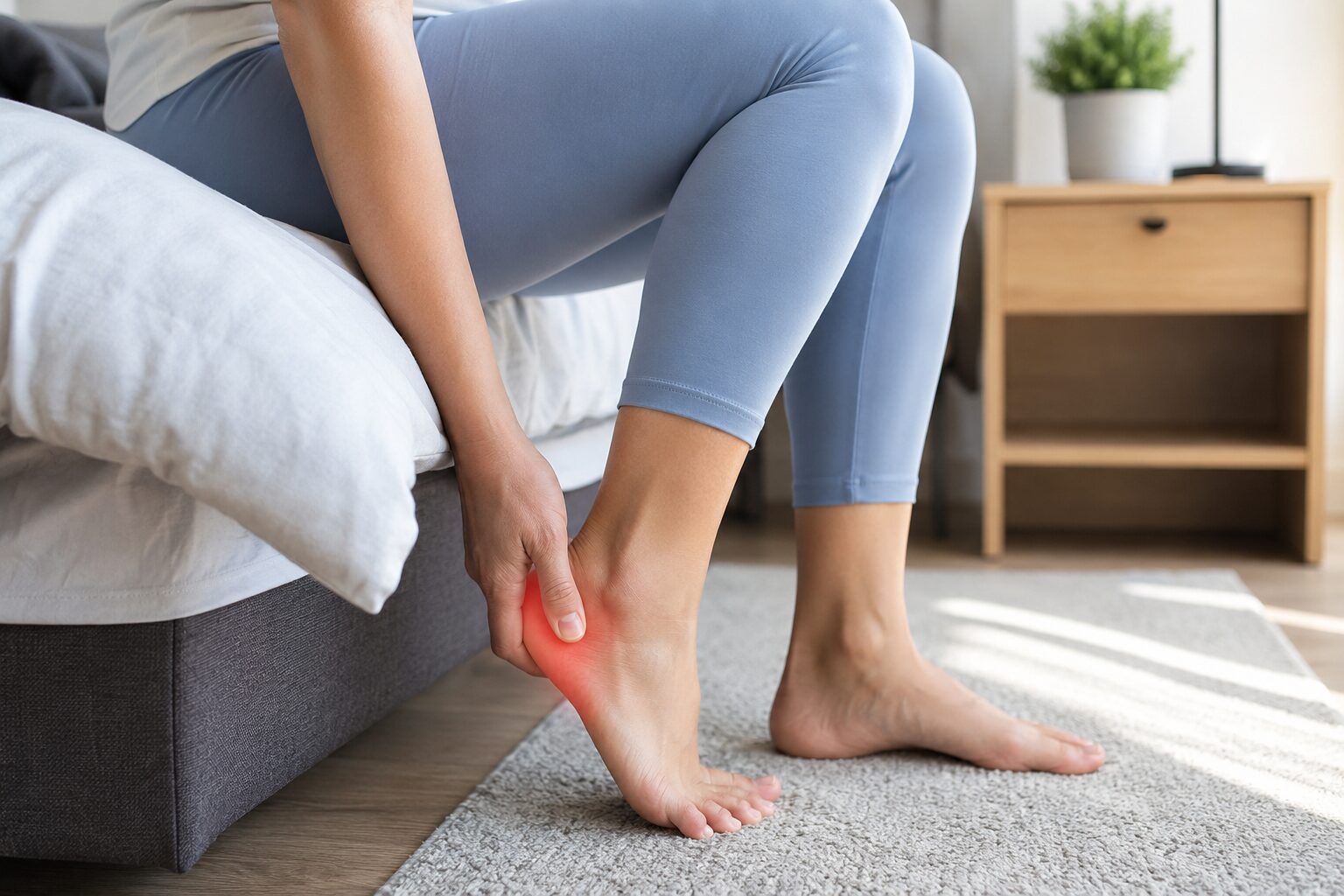
Why Does My Heel Hurt After Sitting?
If you’ve ever stood up after sitting for a while and felt a sharp pain in your heel with your first few steps, you’re not alone. Many people experience heel pain that seems to improve as they continue walking, only to return after resting again.
This type of pain is often a sign of an underlying foot condition that should not be ignored. Understanding the cause can help you get the right treatment before the problem becomes more severe.
Why Does Heel Pain Occur After Sitting?
When you’re sitting or sleeping, the tissues along the bottom of your foot relax and tighten slightly. As you stand, those tissues are suddenly stretched, which can produce a sharp or stabbing pain in the heel.
Many patients describe it as:
- Sharp pain with the first few steps after getting out of bed
- Heel pain after sitting at a desk or driving
- Pain that improves after walking for several minutes
- Discomfort that returns after periods of rest
While several conditions can cause these symptoms, plantar fasciitis is the most common.
Plantar Fasciitis
The plantar fascia is a thick band of tissue that connects your heel bone to your toes and supports your foot’s arch.
When this tissue becomes irritated or develops tiny tears, it becomes inflamed, leading to plantar fasciitis.
Common symptoms include:
- Sharp pain under the heel
- Pain that’s worst with the first steps in the morning
- Heel pain after sitting or resting
- Tenderness on the bottom of the heel
- Pain that gradually improves as you move around
Other Possible Causes
Although plantar fasciitis is common, other conditions may also cause heel pain after sitting.
Heel Spurs
Heel spurs are calcium deposits that develop on the heel bone. Many people have heel spurs without symptoms, but they may occur alongside plantar fasciitis and contribute to discomfort.
Achilles Tendinitis
Pain at the back of the heel may result from inflammation of the Achilles tendon. This is especially common in runners and individuals who have recently increased their physical activity.
Heel Fat Pad Syndrome
The natural cushioning beneath the heel can thin over time or become injured, resulting in deep, aching heel pain that’s often worse on hard surfaces.
Stress Fractures
Repeated impact activities can cause tiny cracks in the heel bone, producing persistent pain that generally worsens with activity rather than improving.
Nerve Entrapment
Compression of small nerves around the heel can cause burning, tingling, numbness, or shooting pain.
Who Is at Risk?
Several factors increase your likelihood of developing heel pain, including:
- Standing for long periods
- Running or high-impact exercise
- Being overweight
- Flat feet or high arches
- Tight calf muscles
- Wearing unsupportive shoes
- Jobs that require prolonged walking or standing
What Can You Do at Home?
Many cases of early heel pain respond well to conservative treatment.
Try these strategies:
- Stretch your calves and plantar fascia daily.
- Wear supportive shoes instead of walking barefoot.
- Replace worn-out athletic shoes.
- Apply ice for 15–20 minutes after activity.
- Reduce activities that worsen the pain.
- Use over-the-counter arch supports or orthotics if recommended.
Avoid ignoring persistent heel pain, as symptoms often worsen without treatment.
When Should You See a Podiatrist?
You should schedule an evaluation if:
- Heel pain lasts longer than two weeks.
- Walking becomes difficult.
- Pain continues despite home treatment.
- Your heel becomes swollen or bruised.
- You experience numbness or tingling.
- Pain is severe or suddenly develops after an injury.
Early diagnosis can help prevent chronic pain and allow you to return to normal activities sooner.
How We Treat Heel Pain
At Canton Foot & Ankle Specialists, we begin with a thorough examination to determine the exact cause of your heel pain.
Depending on your diagnosis, treatment may include:
- Custom orthotics
- Stretching and physical therapy
- Anti-inflammatory medications
- Walking boots when needed
- Cortisone injections
- Surgical treatment for severe cases that do not improve with conservative care
Most patients improve without surgery when treatment begins early.
Don’t Let Heel Pain Slow You Down
If your heel hurts every time you stand up after sitting, your body is telling you something isn’t right. Getting an accurate diagnosis is the first step toward lasting relief.
The experienced team at Canton Foot & Ankle Specialists provides personalized treatment plans for plantar fasciitis, heel pain, Achilles injuries, heel spurs, and many other foot and ankle conditions.
Ready to get back on your feet? Contact Canton Foot & Ankle Specialists today to schedule an appointment and take the first step toward pain-free walking.
Schedule an appointment with Dr. Semma today to get relief from heel pain.
Medical Disclaimer: The information provided in this article is for general educational purposes and is not a substitute for professional medical advice, diagnosis, or treatment. If you are experiencing foot or ankle symptoms, contact Dr. Semma at Canton Foot & Ankle Specialists to schedule an evaluation. If you believe you are experiencing a medical emergency, seek immediate medical care.