
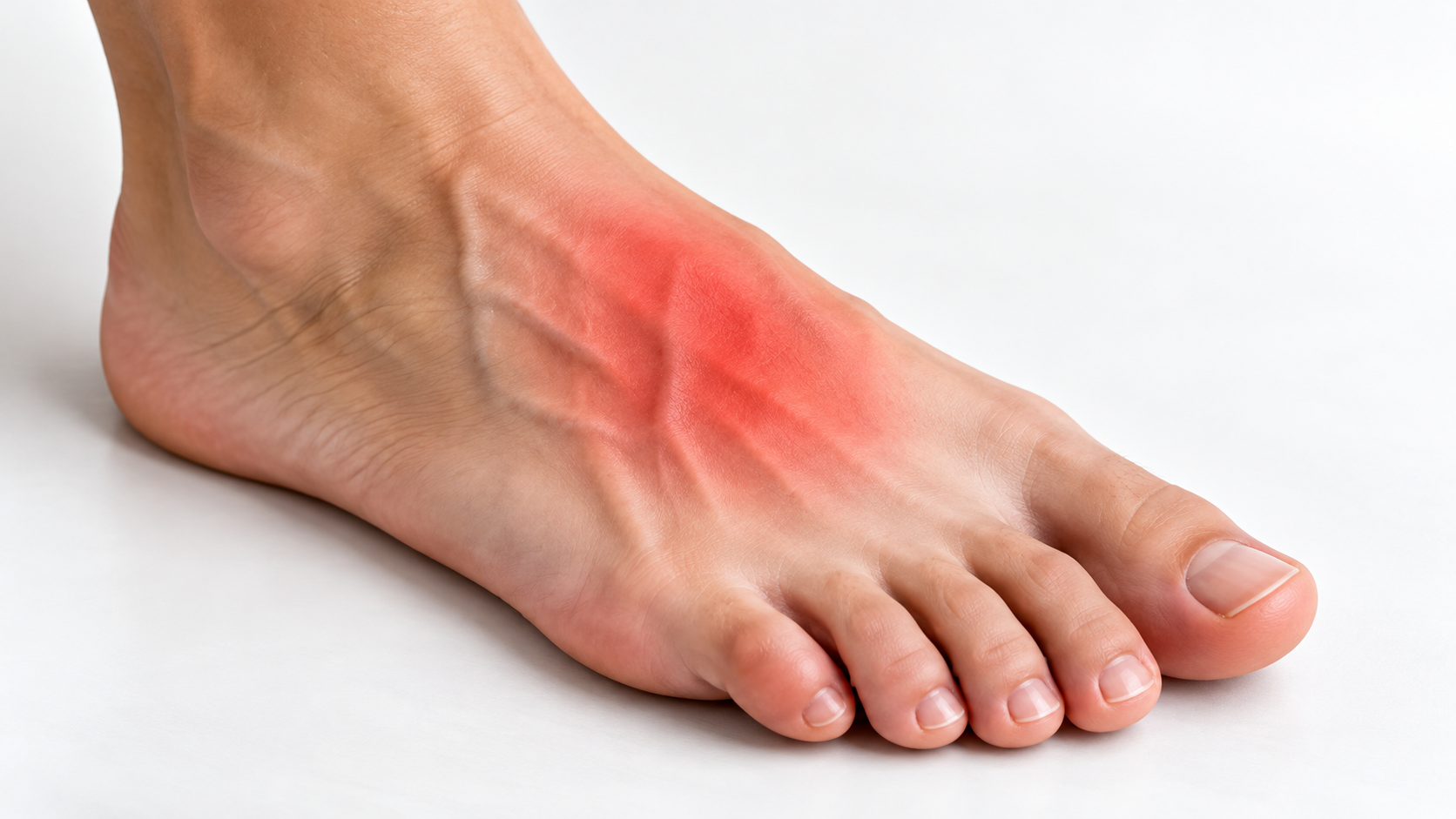
Why Does the Top of My Foot Hurt? Common Causes and Treatment
Pain on the top of your foot can make everyday activities like walking, standing, or wearing shoes uncomfortable. You might notice a dull ache, sharp pain, swelling, or tenderness across the upper part of your foot.
Sometimes the pain develops after increased activity or wearing tight shoes. Other times, it may appear without an obvious injury.
There are several possible causes of pain on the top of the foot, ranging from tendon irritation to arthritis or stress fractures. Understanding what might be causing your discomfort is the first step toward finding appropriate treatment.
What Causes Pain on the Top of the Foot?
The top of your foot contains bones, joints, tendons, nerves, and other structures that work together to support movement.
When these structures become irritated, inflamed, or injured, pain may develop in different areas of the foot.
Some common causes include:
- Extensor tendonitis
- Stress fractures
- Arthritis
- Tight or improperly fitting shoes
- Nerve irritation
- Midfoot injuries
The location of the pain, when it occurs, and whether other symptoms are present can help determine the underlying cause.
Extensor Tendonitis
Extensor tendonitis is one possible cause of pain on the top of the foot.
The extensor tendons run along the upper part of your foot and help lift your toes during walking. Repetitive activity or pressure from footwear can irritate these tendons.
Symptoms may include:
- Aching or tenderness across the top of the foot
- Pain that increases with walking or running
- Mild swelling
- Discomfort when lifting the toes
- Pain caused by pressure from shoelaces
Extensor tendonitis may develop after increasing physical activity, wearing tight shoes, or repeatedly placing stress on the tendons.
Stress Fractures
A stress fracture is a small crack in a bone that can develop from repetitive stress.
Stress fractures commonly affect the metatarsal bones, which run through the middle and front of the foot.
Symptoms may include:
- Pain concentrated in one specific area
- Tenderness when pressing on the affected bone
- Swelling on the top of the foot
- Pain that becomes worse with weight-bearing activity
Unlike general soreness, stress fracture pain often becomes more noticeable during activity and may eventually persist even at rest.
A suspected stress fracture should be evaluated by a healthcare professional because continuing to place stress on the injured bone can delay healing.
Arthritis in the Foot
Arthritis can affect the joints in the middle of the foot and cause pain along the top of the foot.
Over time, cartilage that cushions the joints may wear down, resulting in stiffness, inflammation, and discomfort.
Symptoms of midfoot arthritis may include:
- Pain when walking or standing
- Stiffness in the foot
- Swelling around the affected joints
- Difficulty wearing certain shoes
- A bony prominence on the top of the foot
Arthritis-related discomfort may gradually increase over time, particularly during activities that place pressure on the affected joints.
Can Tight Shoes Cause Pain on Top of the Foot?
Yes. Shoes that fit too tightly across the upper part of the foot can place pressure on tendons, nerves, and other tissues.
Shoelaces that are tied too tightly may also contribute to discomfort.
If the pain occurs primarily while wearing certain shoes, footwear pressure may be contributing to the problem.
Choosing properly fitted shoes with adequate room and adjusting how tightly they are laced may help relieve pressure.
However, persistent pain should not automatically be attributed to footwear.
Nerve Irritation
Nerves that travel across the foot can sometimes become compressed or irritated.
This may cause symptoms such as:
- Burning or tingling
- Sharp or shooting pain
- Numbness
- Increased sensitivity
- Discomfort when shoes press against the foot
Because several different conditions can cause nerve-related symptoms, a professional evaluation may be needed to identify the source of the problem.
Why Does the Top of My Foot Hurt When I Walk?
Walking places repeated pressure on the bones, joints, and tendons of the foot.
If one of these structures is irritated or injured, pain may become more noticeable with each step.
For example, tendonitis may cause discomfort when the tendons are repeatedly used, while arthritis may produce pain as the joints move.
Stress fractures can also cause pain during weight-bearing activities.
The exact cause depends on the location of the pain and other symptoms.
What Can You Do for Pain on the Top of Your Foot?
Treatment depends on what is causing the discomfort.
For mild pain associated with overuse or footwear pressure, some general measures may help:
- Rest: Temporarily reduce activities that aggravate the pain.
- Footwear changes: Choose shoes that fit comfortably without placing excessive pressure on the top of the foot.
- Ice: Applying a cold pack wrapped in a towel for short periods may help reduce discomfort and swelling.
- Activity modification: Avoid repeatedly stressing the painful area until the cause is better understood.
- Orthotics: In some cases, a podiatrist may recommend orthotic devices to improve foot mechanics and redistribute pressure.
These approaches may not be appropriate for every condition. For example, a stress fracture may require immobilization and a period of restricted weight-bearing.
Avoid continuing high-impact activities if you suspect a significant injury.
When Should You See a Podiatrist?
Occasional mild discomfort may improve with rest or changes in footwear. However, persistent or worsening pain should be evaluated.
Consider seeing a podiatrist if:
- Pain continues despite rest
- You notice swelling or significant tenderness
- Walking becomes uncomfortable
- Pain is concentrated over a specific bone
- You experience numbness or tingling
- Symptoms repeatedly return
- Pain interferes with work, exercise, or daily activities
Seek prompt medical attention if you cannot bear weight, have severe pain after an injury, or develop significant redness, warmth, fever, or rapidly worsening swelling.
Get Help for Pain on the Top of Your Foot
Pain on the top of your foot can have several possible causes, and identifying the underlying problem is important for choosing the right treatment.
Whether your symptoms are related to tendon irritation, arthritis, a stress injury, or another foot condition, a podiatrist can evaluate your symptoms and recommend appropriate care.
If you’re experiencing persistent pain on the top of your foot, contact Dr. Semma at Canton Foot & Ankle Specialists to schedule an evaluation.
Early diagnosis can help address the cause of your discomfort and support a safe return to your normal activities.
Medical Disclaimer: The information provided in this article is for general educational purposes and is not a substitute for professional medical advice, diagnosis, or treatment. If you are experiencing foot or ankle symptoms, contact Dr. Semma at Canton Foot & Ankle Specialists to schedule an evaluation. If you believe you are experiencing a medical emergency, seek immediate medical care.