
Is It a Plantar Wart or a Callus? How to Tell the Difference
Have you noticed a rough, thickened spot on the bottom of your foot? Maybe it feels uncomfortable when you walk, or you’ve discovered a small, hardened area that doesn’t seem to go away.
Two common causes of these spots are plantar warts and calluses. Although they can look similar, they develop for different reasons and may require different treatments.
A plantar wart is caused by a viral infection, while a callus develops when the skin thickens in response to repeated pressure or friction.
Understanding the differences between a plantar wart and a callus can help you recognize when it’s time to see a podiatrist.
What Is a Plantar Wart?
A plantar wart is a small skin growth caused by certain types of the human papillomavirus (HPV).
Plantar warts develop on the soles of the feet, often in areas that experience pressure during standing or walking.
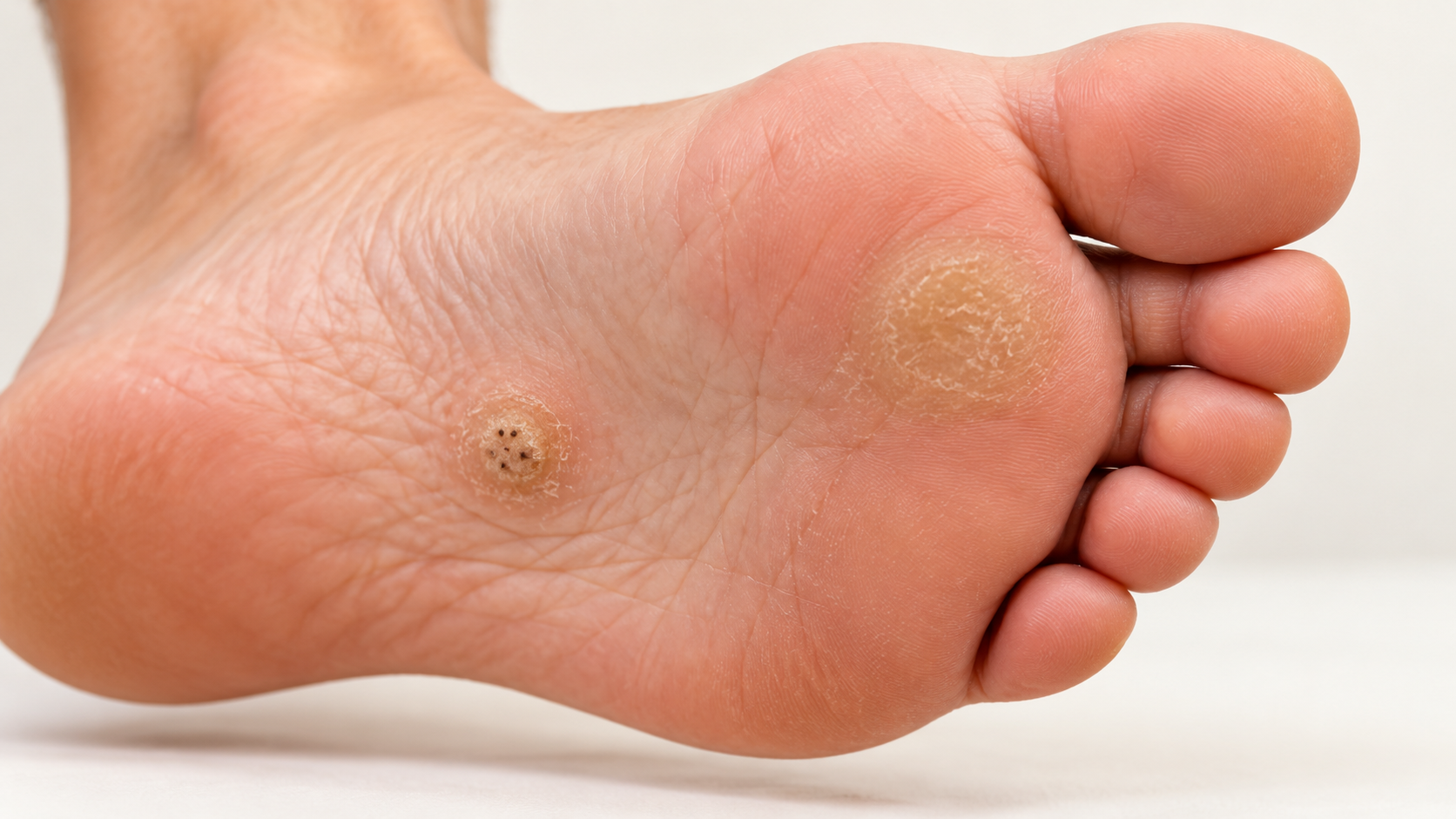
Because of this pressure, the wart may grow inward beneath a layer of thickened skin rather than forming a raised bump.
Common signs of a plantar wart include:
- A rough or grainy area on the bottom of the foot
- Small black or dark dots within the lesion
- Pain or tenderness when walking
- A spot that interrupts the normal skin lines
- One wart or a cluster of smaller warts
The dark dots sometimes seen in plantar warts are small, clotted blood vessels rather than roots.
Plantar warts may occur on the heel, ball of the foot, or other weight-bearing areas.
What Is a Callus?
A callus is an area of thickened skin that develops in response to repeated pressure or friction.
Calluses are the body’s way of protecting the skin from irritation.
They commonly develop on the heels, balls of the feet, and other areas that experience repeated pressure.
Signs of a callus may include:
- Thick, hardened skin
- A yellowish or slightly discolored appearance
- A relatively smooth or rough surface
- Dry or flaky skin
- Discomfort when pressure is applied
Unlike plantar warts, calluses are not caused by a virus and are not contagious.
Calluses may develop from footwear pressure, walking patterns, foot structure, or activities that repeatedly place stress on certain areas of the foot.
Plantar Wart vs. Callus: What’s the Difference?
Although plantar warts and calluses can look similar, several characteristics may help distinguish them.
| Feature | Plantar Wart | Callus |
|---|---|---|
| Cause | Human papillomavirus (HPV) | Repeated pressure or friction |
| Appearance | Rough, grainy skin growth | Thickened, hardened skin |
| Dark dots | May contain small dark dots | Usually absent |
| Skin lines | Often interrupted | Usually continue through the area |
| Pain | May hurt when walking or when squeezed from the sides | Often hurts with direct pressure |
| Contagious | Yes | No |
| Common locations | Heel, ball of foot, other areas of the sole | Heel, ball of foot, pressure points |
These differences can provide clues, but they are not always reliable enough to make a diagnosis at home.
A plantar wart may be covered by thickened skin and resemble a callus. In some cases, both conditions can occur in the same area.
Does a Plantar Wart Hurt More Than a Callus?
Both plantar warts and calluses can cause discomfort, particularly when they develop on weight-bearing areas of the foot.
Plantar warts may cause tenderness when pressure is applied from the sides of the lesion. They can also become painful when walking or standing.
Calluses are more commonly uncomfortable when direct pressure is applied to the thickened skin.
However, pain patterns vary, and neither type of discomfort can definitively distinguish a wart from a callus.
Some plantar warts are painless, while thick calluses can become quite uncomfortable.
What Are the Black Dots in a Plantar Wart?
One characteristic sometimes associated with plantar warts is the appearance of tiny black dots within the lesion.
These dots are small blood vessels that have clotted.
They may become more noticeable when the surrounding thickened skin is professionally reduced.
Calluses generally do not contain these characteristic dots.
However, not every plantar wart has visible black dots, and other skin conditions can also cause dark spots.
Avoid cutting or scraping the area yourself to look for these signs, as doing so can cause injury or infection.
Can a Callus Turn Into a Plantar Wart?
No. A callus does not turn into a plantar wart.
The two conditions develop for different reasons.
A callus forms because of repeated pressure or friction, while a plantar wart develops when HPV infects the skin.
However, a plantar wart can develop beneath an area of thickened skin, making it difficult to distinguish from a callus.
If a spot on your foot changes in appearance, becomes painful, or continues growing, a podiatrist can evaluate it.
Are Plantar Warts Contagious?
Yes. Plantar warts are caused by HPV and can spread through direct contact with infected skin or contaminated surfaces.
The virus may enter through small cuts or breaks in the skin.
Walking barefoot in shared environments, such as locker rooms, pool areas, or communal showers, can increase the chance of exposure.
To help reduce the risk of spreading plantar warts:
- Wear sandals or shower shoes in shared wet areas.
- Avoid picking or scratching a wart.
- Keep your feet clean and dry.
- Avoid sharing items such as towels or nail tools.
- Wash your hands after touching an affected area.
Calluses, on the other hand, are not contagious.
How Are Plantar Warts Treated?
Treatment depends on the wart’s size, location, symptoms, and response to previous care.
Some plantar warts disappear without treatment, but others may persist or become painful.
A podiatrist may recommend treatments such as:
- Topical medications to gradually remove affected skin
- Cryotherapy, which uses controlled freezing
- Professional removal of thickened skin covering the wart
- Other procedures for persistent or difficult-to-treat warts
Treatment may require multiple visits, and plantar warts can sometimes return.
Avoid attempting to cut out a wart at home.
People with diabetes, poor circulation, neuropathy, or reduced sensation in their feet should seek professional guidance before using over-the-counter wart removal products.
How Are Calluses Treated?
Callus treatment focuses on reducing discomfort and addressing the pressure or friction that caused the skin to thicken.
Depending on the situation, treatment may include:
- Professional reduction of thickened skin
- Footwear modifications
- Protective padding
- Orthotic devices to redistribute pressure
- Moisturizing products to improve dry skin
- Addressing underlying foot mechanics
Because calluses often develop in response to repeated pressure, they may return if the underlying cause is not addressed.
Avoid cutting calluses with sharp tools or using strong chemical callus removers without professional guidance, particularly if you have diabetes, poor circulation, or reduced sensation.
When Should You See a Podiatrist?
Consider scheduling an evaluation if:
- You cannot tell whether the spot is a wart or a callus.
- The area is painful when walking.
- The lesion continues growing or changing.
- Home care has not improved the problem.
- You notice bleeding, drainage, or signs of infection.
- Multiple similar spots begin appearing.
- You have diabetes, neuropathy, or circulation problems.
Seek prompt medical attention for rapidly changing, irregularly pigmented, ulcerated, or persistently bleeding lesions. Not every unusual spot on the foot is a wart or callus, and some skin conditions require further evaluation.
Get Help for Plantar Warts and Calluses
Plantar warts and calluses may look alike, but identifying the underlying cause is important for choosing the right treatment.
Whether you’re dealing with a painful plantar wart, recurring callus, or an unfamiliar spot on the bottom of your foot, a podiatrist can examine the area and recommend appropriate care.
If you’re experiencing persistent discomfort or are unsure what’s causing a spot on your foot, contact Dr. Semma at Canton Foot & Ankle Specialists to schedule an evaluation.
Professional assessment can help determine the cause of your symptoms and the most appropriate next steps.
Medical Disclaimer: The information provided in this article is for general educational purposes and is not a substitute for professional medical advice, diagnosis, or treatment. If you are experiencing foot or ankle symptoms, contact Dr. Semma at Canton Foot & Ankle Specialists to schedule an evaluation. If you believe you are experiencing a medical emergency, seek immediate medical care.