
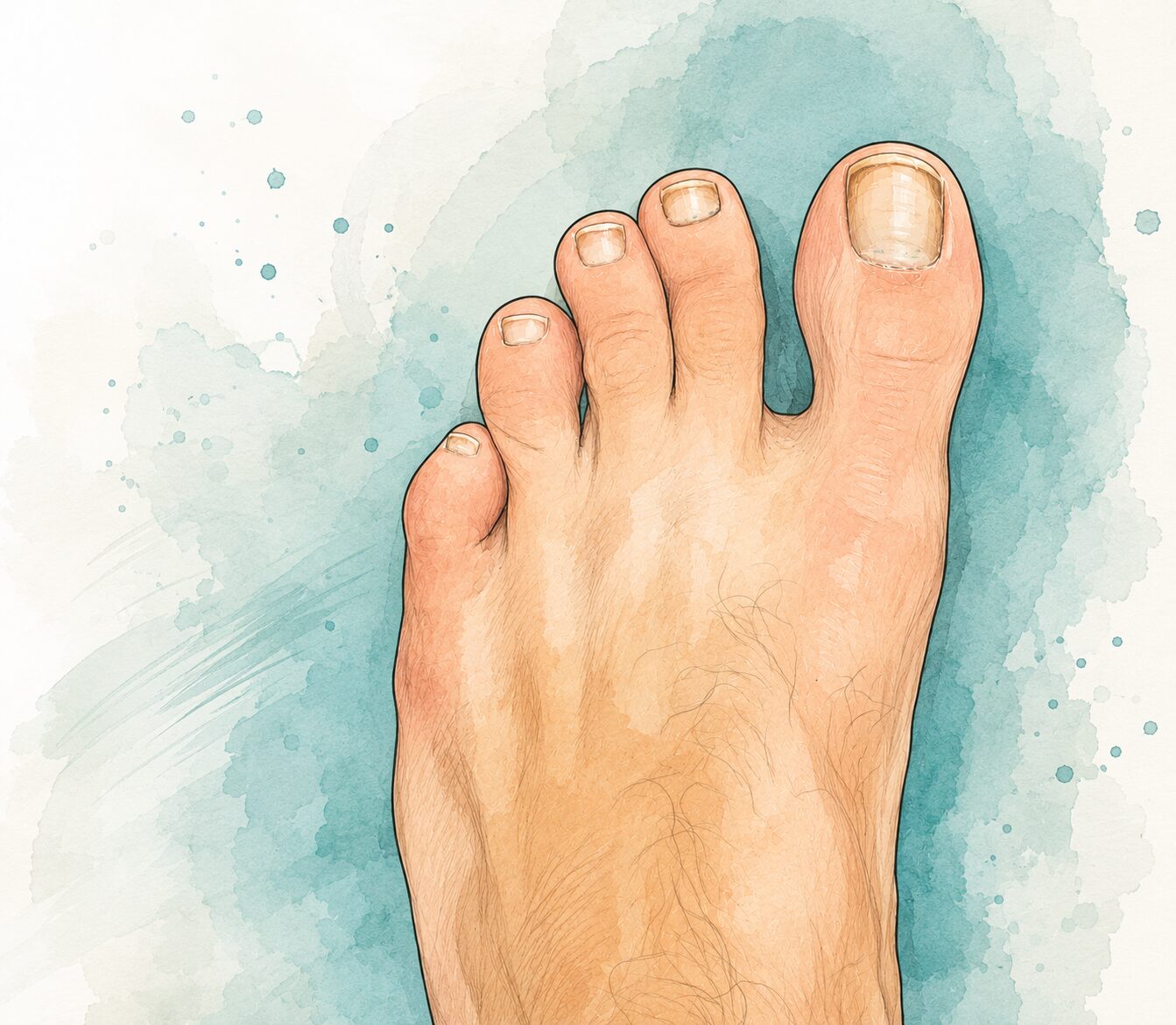
Why Is My Second Toe Crossing Over My Third Toe?
Understanding Crossover Toe
If you’ve noticed your second toe beginning to drift or cross over your third toe, you’re not alone. This condition, known as crossover toe, can gradually worsen over time and make walking, wearing shoes, and staying active increasingly uncomfortable.
The good news is that early treatment can often slow progression and relieve pain before surgery becomes necessary.
What Is a Crossover Toe?
A crossover toe occurs when the second toe shifts out of its normal position and begins to overlap or cross over the third toe. The condition usually develops gradually as the ligaments, tendons, and joint structures that stabilize the toe weaken over time.
Although the second toe is most commonly affected, crossover deformities can involve other toes as well.
Common Symptoms
Patients with crossover toe often experience:
- The second toe drifting toward or over the third toe
- Pain in the ball of the foot
- Swelling around the base of the toe
- Difficulty wearing certain shoes
- Corns or calluses from rubbing
- A feeling of instability when walking
- Toe stiffness or reduced flexibility
Many patients first notice that their shoes no longer fit comfortably or that the toe appears crooked.
What Causes Crossover Toe?
Several factors can contribute to crossover toe, including:
Bunions
A bunion can push the second toe out of alignment, forcing it toward the third toe over time.
Plantar Plate Injury
The plantar plate is a strong ligament beneath the toe joint. When it becomes stretched or torn, the toe loses stability and may begin crossing over neighboring toes.
Arthritis
Inflammatory arthritis, including rheumatoid arthritis, can weaken joints and ligaments, allowing toe deformities to develop.
Foot Structure
People with flat feet, high arches, or abnormal foot mechanics may place excessive pressure on the forefoot, increasing the risk of crossover toe.
Improper Footwear
Shoes with narrow toe boxes or high heels place extra stress on the toes and can worsen existing deformities.
How Is Crossover Toe Diagnosed?
A podiatrist can usually diagnose crossover toe through a physical examination.
Your evaluation may include:
- Assessing toe alignment
- Examining joint stability
- Checking for plantar plate injuries
- Evaluating bunions or hammertoes
- X-rays to determine joint changes and severity
Early diagnosis often allows for more conservative treatment options.
Treatment Options
Treatment depends on how advanced the deformity has become.
Conservative Treatments
For mild to moderate crossover toe, your podiatrist may recommend:
- Wider, supportive footwear
- Custom orthotics
- Toe splints or taping
- Padding to reduce pressure
- Anti-inflammatory medications
- Activity modification
- Physical therapy exercises
These treatments can relieve pain and slow progression but generally cannot reverse an established deformity.
Surgical Treatment
If conservative care no longer provides relief or the toe becomes severely deformed, surgery may be recommended.
Depending on the underlying cause, procedures may include:
- Plantar plate repair
- Tendon balancing
- Hammertoe correction
- Bunion correction
- Joint realignment
Your podiatrist will recommend the procedure that best restores toe alignment and improves foot function.
Can Crossover Toe Be Prevented?
While not every case can be prevented, you can reduce your risk by:
- Wearing shoes with a wide toe box
- Treating bunions early
- Using supportive footwear
- Addressing foot pain promptly
- Maintaining a healthy weight
- Seeking evaluation if you notice toe alignment changes
The earlier crossover toe is treated, the easier it is to manage.
When Should You See a Podiatrist?
Schedule an evaluation if you notice:
- Your second toe crossing over another toe
- Pain in the ball of your foot
- Difficulty fitting into shoes
- Increasing toe deformity
- Swelling or instability around the toe joint
Early treatment can often prevent the condition from worsening and help you avoid more extensive procedures.
Expert Crossover Toe Treatment in Canton
At Canton Foot & Ankle Specialists, we diagnose and treat crossover toe using both conservative and advanced surgical options. Our goal is to relieve pain, restore proper toe alignment, and help you stay active with personalized treatment tailored to your needs.
If your second toe is beginning to cross over your third toe, don’t wait for the condition to worsen. Contact our office today to schedule an evaluation.
Schedule an appointment with Dr. Semma today to get relief.
Medical Disclaimer: The information provided in this article is for general educational purposes and is not a substitute for professional medical advice, diagnosis, or treatment. If you are experiencing foot or ankle symptoms, contact Dr. Semma at Canton Foot & Ankle Specialists to schedule an evaluation. If you believe you are experiencing a medical emergency, seek immediate medical care.