
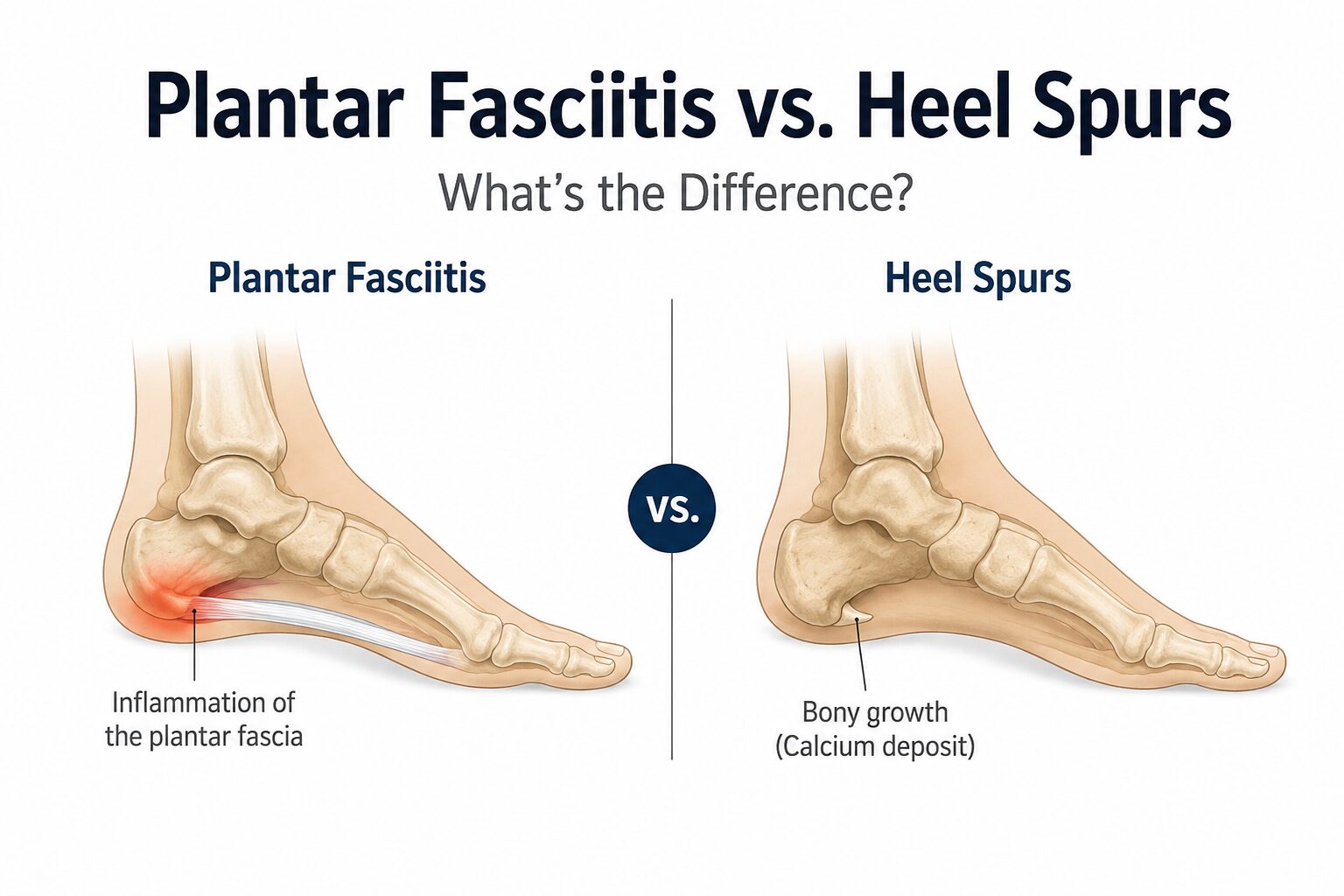
Plantar Fasciitis vs. Heel Spurs: What’s the Difference?
Heel pain is one of the most common reasons people visit a podiatrist. Two conditions that are often confused are plantar fasciitis and heel spurs. While they can occur together, they are not the same condition.
Understanding the difference can help you receive the right treatment and find lasting relief.
What Is Plantar Fasciitis?
Plantar fasciitis is inflammation of the plantar fascia—the thick band of tissue that runs from your heel bone to your toes. This tissue supports your arch and absorbs shock every time you walk.
Repeated stress, overuse, or excessive stretching can cause tiny tears in the plantar fascia, leading to inflammation and heel pain.
Common Symptoms of Plantar Fasciitis
- Sharp pain in the bottom of the heel
- Pain that’s worst with the first steps in the morning
- Heel pain after sitting for long periods
- Pain that improves after walking for several minutes
- Increased discomfort after prolonged standing or exercise
Plantar fasciitis is the most common cause of heel pain in adults.
What Is a Heel Spur?
A heel spur is a small calcium deposit that forms on the underside of the heel bone over time. It develops as the body responds to repeated stress where the plantar fascia attaches to the heel.
Heel spurs are visible on an X-ray but often do not cause pain.
Many people have heel spurs and never experience symptoms.
Plantar Fasciitis vs. Heel Spurs
Although the two conditions are related, they are different.
| Plantar Fasciitis | Heel Spur |
|---|---|
| Inflammation of the plantar fascia | Bony calcium deposit on the heel bone |
| Usually causes pain | Often causes no symptoms |
| Cannot be seen on X-rays | Easily visible on X-rays |
| Soft tissue injury | Bone growth |
| Usually treated without surgery | Rarely requires surgery |
Many patients with plantar fasciitis also have heel spurs, but the heel spur itself is often not the source of the pain.
Can You Have Both?
Yes.
Because plantar fasciitis places repeated stress where the plantar fascia attaches to the heel bone, a heel spur may develop over time.
Even when a heel spur is present, the inflamed plantar fascia is usually what causes the painful first steps in the morning.
What Causes These Conditions?
Several factors increase your risk for both plantar fasciitis and heel spurs:
- Flat feet or high arches
- Tight calf muscles
- Poorly supportive footwear
- Standing for long periods
- Obesity
- Running and high-impact sports
- Jobs that require walking on hard surfaces
How Are They Diagnosed?
A podiatrist will begin with a physical examination and discuss your symptoms.
During your visit, your doctor may:
- Check where the heel is tender
- Evaluate your foot mechanics
- Assess flexibility of the Achilles tendon and calf muscles
- Observe your walking pattern
- Order X-rays if a heel spur or other condition is suspected
Because heel spurs frequently occur without pain, diagnosis focuses more on your symptoms than on X-ray findings alone.
Treatment Options
The good news is that most cases of plantar fasciitis improve with conservative treatment.
Treatment may include:
- Stretching exercises
- Custom orthotics or supportive shoe inserts
- Supportive footwear recommendations
- Activity modification
- Anti-inflammatory medications when appropriate
- Ice therapy
- Physical therapy
- Corticosteroid injections in selected cases
- Advanced treatments such as shockwave therapy if conservative care is unsuccessful
Surgery is rarely necessary and is typically considered only after several months of unsuccessful non-surgical treatment.
When Should You See a Podiatrist?
Schedule an evaluation if:
- Heel pain lasts longer than a few weeks
- Pain interferes with walking or daily activities
- Home treatments aren’t helping
- You experience severe pain or swelling
- You have diabetes or poor circulation and develop foot pain
Early treatment often leads to faster recovery and helps prevent chronic heel pain.
Find Relief from Heel Pain
Whether your heel pain is caused by plantar fasciitis, a heel spur, or another condition, an accurate diagnosis is the first step toward effective treatment.
At Canton Foot & Ankle Specialists, our experienced podiatrists evaluate the underlying cause of heel pain and create personalized treatment plans designed to relieve pain, restore mobility, and help you get back to your normal activities.
Don’t ignore persistent heel pain—early care can make all the difference.
Ready to get back on your feet? Contact Canton Foot & Ankle Specialists today to schedule an appointment and take the first step toward pain-free walking.
Schedule an appointment with Dr. Semma today to get relief.
Medical Disclaimer: The information provided in this article is for general educational purposes and is not a substitute for professional medical advice, diagnosis, or treatment. If you are experiencing foot or ankle symptoms, contact Dr. Semma at Canton Foot & Ankle Specialists to schedule an evaluation. If you believe you are experiencing a medical emergency, seek immediate medical care.