
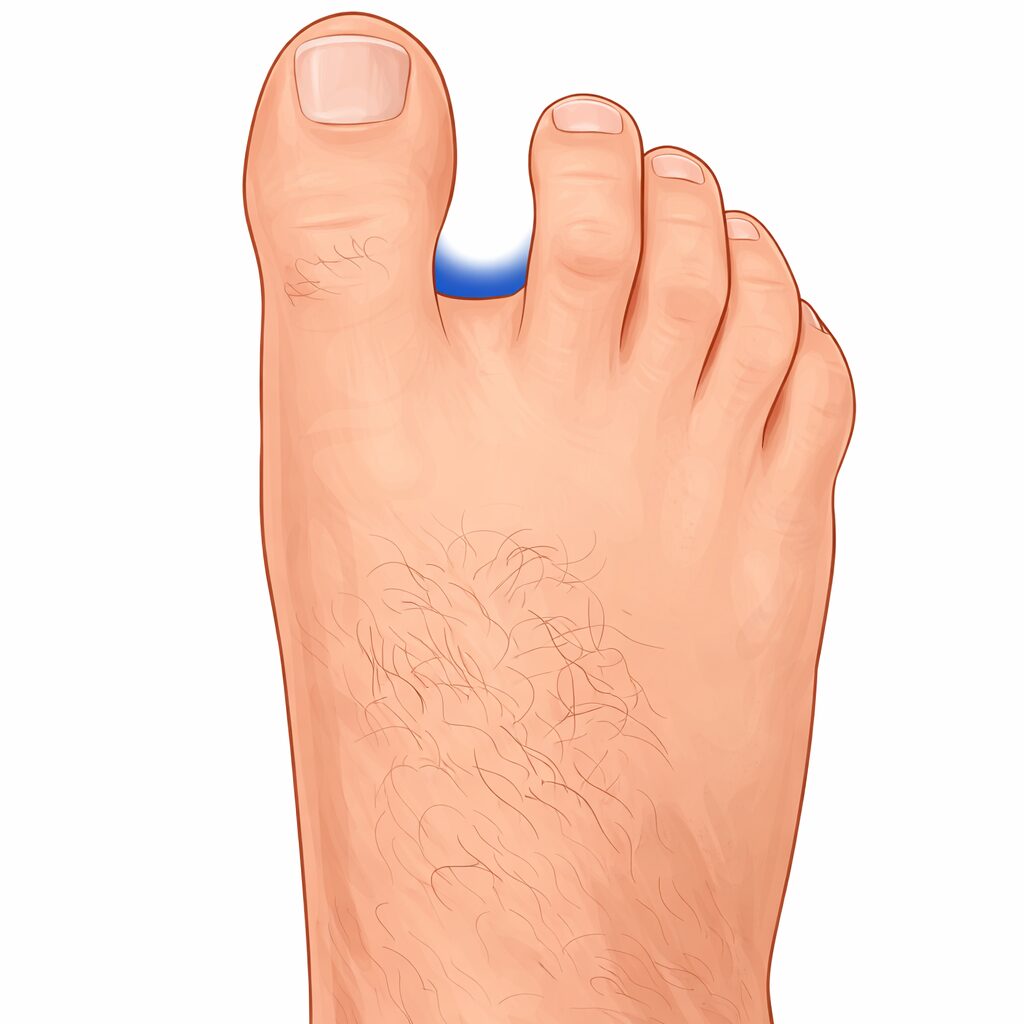
Why Is There a Gap Between My Big Toe and Second Toe?
If you’ve noticed a widening gap between your big toe and second toe, you may be wondering what it means and whether it’s something to worry about.
In many cases, a gap between these toes develops gradually as a result of changes in the tendons, joints, or bones of the foot. Sometimes it causes no pain, but in other cases it can lead to toe instability, discomfort when walking, or difficulty wearing shoes.
Understanding the possible causes can help determine when it’s time to see a podiatrist.
Common Causes of a Gap Between the Big Toe and Second Toe
Several foot conditions can cause the big toe to move away from the second toe.
Crossover Toe or Drifting Toe
One of the most common causes is crossover toe, also called drifting toe.
This condition occurs when the ligaments that stabilize the second toe weaken. As the joint becomes unstable, the toe may shift toward the big toe or move upward, creating a visible gap.
Symptoms may include:
-
Pain in the ball of the foot
-
A feeling that the toe is unstable or lifting
-
Swelling near the base of the second toe
-
Difficulty fitting comfortably in shoes
Without treatment, crossover toe may gradually worsen.
Capsulitis of the Second Toe
Capsulitis is inflammation of the ligament capsule that surrounds the toe joint.
This condition commonly develops in the joint at the base of the second toe and can cause the toe to shift position over time, creating a gap between toes.
People with capsulitis may notice:
-
Pain under the ball of the foot
-
Swelling near the toe joint
-
A sensation of walking on a small pebble
Early treatment can often prevent the condition from progressing.
Bunions
A bunion can also create spacing changes between the big toe and second toe.
When a bunion develops, the big toe gradually shifts toward the smaller toes. This can sometimes change the alignment of the second toe, making the gap between them appear larger.
Signs of bunions include:
-
A bump on the side of the big toe joint
-
Redness or swelling near the joint
-
Pain when wearing tight shoes
Morton’s Neuroma
Another possible cause of discomfort between the toes is Morton’s neuroma, which involves thickening of the nerve between the toes.
Although this condition typically occurs between the third and fourth toes, it can sometimes affect other areas of the forefoot and cause symptoms such as:
-
Burning pain in the ball of the foot
-
Tingling in the toes
-
A sensation of standing on a small object
When Should You See a Podiatrist?
A gap between the toes may not always require treatment, but you should consider seeing a podiatrist if you experience:
-
Persistent foot pain
-
Swelling in the ball of the foot
-
Toes that appear to be shifting or crossing
-
Difficulty walking or wearing shoes
Early evaluation can help identify the underlying cause and prevent the condition from worsening.
Treatment Options
Treatment depends on the specific condition causing the toe separation.
Conservative treatments often include:
-
Padding or taping the toe to improve alignment
-
Custom orthotics to relieve pressure
-
Shoe modifications to reduce irritation
-
Anti-inflammatory treatment for joint pain
In more advanced cases, minor surgical procedures may be recommended to restore proper toe alignment.
Expert Foot Care in Canton, Michigan
Changes in toe alignment are often easier to treat when addressed early. If you’ve noticed a gap forming between your big toe and second toe, a professional evaluation can help determine the cause and the best treatment options.
Dr. Brandon Semma and the team at Canton Foot & Ankle Specialists provide comprehensive care for conditions affecting the toes, forefoot, and ankle.
Schedule an appointment with Dr. Semma today to have your foot evaluated and receive personalized treatment.
Medical Disclaimer: The information provided in this article is for general educational purposes and is not a substitute for professional medical advice, diagnosis, or treatment. If you are experiencing foot or ankle symptoms, contact Dr. Semma at Canton Foot & Ankle Specialists to schedule an evaluation. If you believe you are experiencing a medical emergency, seek immediate medical care.