
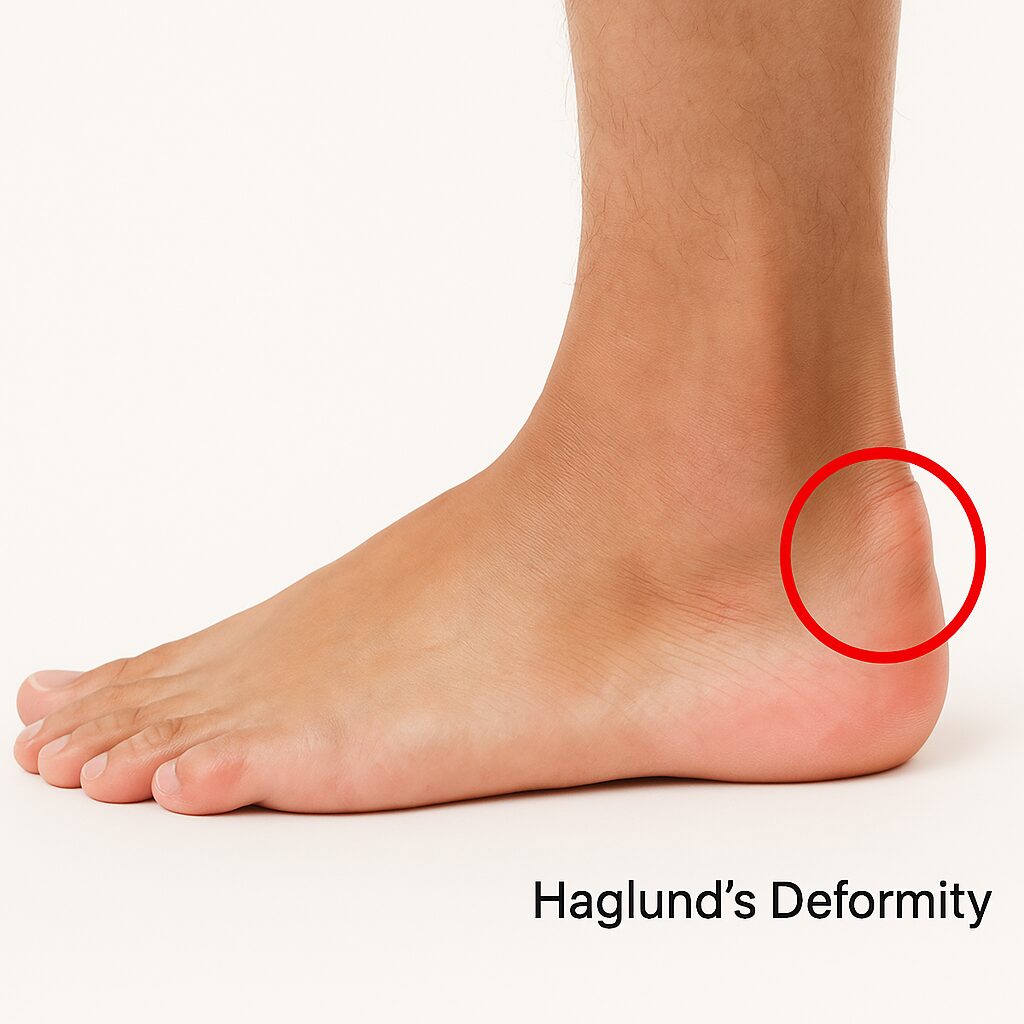
Haglund’s Deformity: Causes, Symptoms & Treatment Options
Haglund’s deformity—often called the “pump bump”—is a common source of heel pain and irritation. It appears as a bony enlargement on the back of the heel where the Achilles tendon attaches. When this bump rubs against shoes, the soft tissues become irritated, leading to inflammation, pain, and swelling. With the right care, most people experience meaningful relief without surgery.
What Is Haglund’s Deformity?
Haglund’s deformity is a mechanical condition in which extra bone forms on the back of the heel bone (calcaneus). This prominence increases friction and pressure when wearing certain shoes—especially stiff-backed shoes, dress shoes, cleats, and pumps. Over time, this irritation can inflame the surrounding tissues, including the bursa (a fluid-filled sac), leading to bursitis and deeper heel pain.
Common Symptoms
People with Haglund’s deformity often experience:
-
A noticeable bump at the back of the heel
-
Pain where the Achilles tendon inserts
-
Redness, swelling, or warmth around the area
-
Stiffness or tightness in the Achilles tendon
-
Increased discomfort after wearing shoes with hard backs
-
Pain that worsens during activity or after rest
If left untreated, chronic irritation may contribute to Achilles tendinitis or difficulty with certain movements, such as walking uphill or climbing stairs.
What Causes Haglund’s Deformity?
Several factors can increase your risk:
Foot Shape
-
-
High arches (cavus feet)
-
Tight Achilles tendon
-
A naturally prominent heel bone
-
Footwear
-
-
Stiff-backed shoes
-
Rigid dress shoes
-
Ice skates or athletic cleats
-
Pumps with tight heel counters
-
Repetitive Stress
Activities such as running, walking long distances, or sports that involve sudden stops and starts can increase pressure on the heel.
Some people are simply born with a foot structure that makes them more prone to developing this condition.
How Haglund’s Deformity Is Diagnosed
A foot and ankle specialist will assess:
-
Foot structure
-
Pain location
-
Gait mechanics
-
Range of motion
-
Shoe wear patterns
X-rays can help confirm the size of the bony prominence and rule out other causes of heel pain, such as Achilles insertional tendinopathy or bone spurs.
Treatment Options
Most people find relief with conservative, nonsurgical care. Common treatments include:
- Footwear changes – Switching to soft-backed or open-back shoes, avoiding stiff heel counters, and using padded liners to reduce friction.
- Stretching & physical therapy – Calf stretching, strengthening exercises, and techniques that reduce stiffness and inflammation.
- Heel lifts & orthotics – Custom orthotics, heel lifts, and pads to improve foot alignment and decrease pressure on the heel bone.
- Anti-inflammatory care – Ice, oral or topical anti-inflammatories, and modifying activities that aggravate symptoms.
- In-office treatments – Modalities like ultrasound or laser therapy, manual therapy, taping, or bracing to offload stress.
If these measures don’t help and pain continues to interfere with daily life, surgery may be considered to remove the bony prominence and address inflamed tissue.
To prevent flare-ups, wear proper footwear, stretch regularly, avoid pressure on the back of the heel, and use orthotics if recommended.
If you’re experiencing heel pain, a visible bump, or symptoms that aren’t improving, schedule an appointment today to get the personalized care you need.
Medical Disclaimer: The information provided in this article is for general educational purposes and is not a substitute for professional medical advice, diagnosis, or treatment. If you are experiencing foot or ankle symptoms, contact Dr. Semma at Canton Foot & Ankle Specialists to schedule an evaluation. If you believe you are experiencing a medical emergency, seek immediate medical care.